

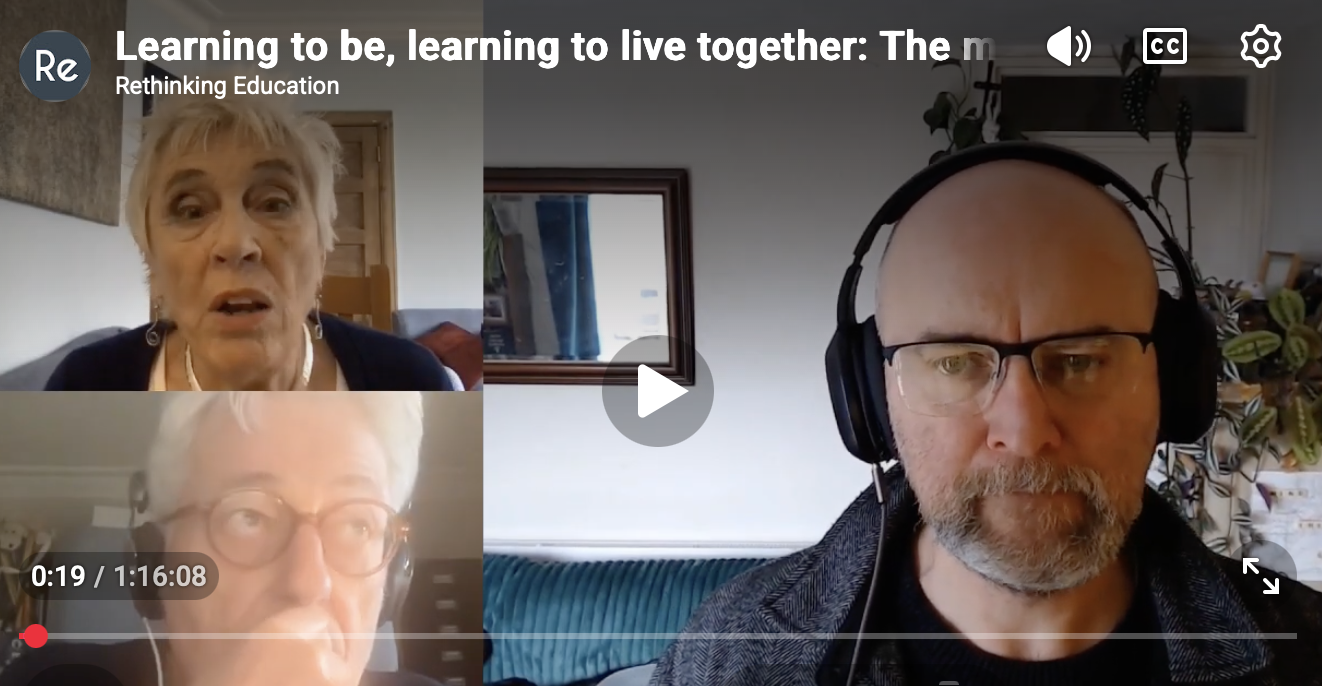
In this episode, James Mannion and David Cameron are joined by Sue Roffey – educational psychologist, researcher, and leading voice on wellbeing, social justice, and relational approaches to education. Sue traces her journey from working with young people facing emotional and behavioural challenges, through educational psychology and academia, to her current work developing the ASPIRE principles – a framework for reimagining education through agency, safety, positivity, inclusion, respect and equity. The conversation explores why wellbeing and learning are not competing priorities but deeply intertwined, and why many current approaches to behaviour and school improvement miss this fundamental point.
James says:
At the first Rethinking Education conference in 2022, I was running a workshop on how we might create a system that works for all young people. My mum was there, and she came up to me halfway through the session:
“You have to meet this lady.”
That lady was Dr Sue Roffey, who exploded into my life that day – we have had countless conversations since. Sue is a remarkable human being. Energetic, wise, indefatigable… Check out her website if you are not yet acquainted.
Recently, David and I caught up with Sue to find out more about her work. Here are some highlights:
The problem with problem-solving
As someone who has embraced ‘root cause analysis’ with all the zeal of a recent convert, one idea I found gently provocative was that Sue is ‘not that interested in taking problems to pieces’.
This runs counter to much of school improvement, which often begins with deficit analysis – identifying gaps, weaknesses, failures.
Her argument is not that focusing on the problems of the present is that those problems come to dominate your thinking, and the aim becomes simply to remove a problem and return to som sort of acceptable status quo.
When we fixate on what is broken, we risk losing sight of where we are trying to go.
Su suggests that a more productive starting point is vision:
- What kind of school are we trying to create?
- What kind of people do we hope young people become?
- What would it look like if things were working well?
Without a positive vision of the future that you’re working towards, school improvement can become directionless trouble-shooting.
From happiness to mattering
Another distinction that Sue emphasises is between happiness and mattering. Happiness is individual. Mattering is relational.
To matter is to feel valued, and to add value – to know that your presence makes a difference.
This has profound implications for schools. Students need to feel that they belong – but also that they contribute. Teachers need to feel respected – but also trusted to act.
The ASPIRE principles
Sue’s ASPIRE framework provides a systematic approach to increasing wellbeing and mattering in schools:
- Agency – having a voice and the ability to influence what happens
- Safety – physical, psychological and emotional security
- Positivity – strengths-based, solution-focused cultures
- Inclusion – belonging rooted in shared humanity, not similarity
- Respect – treating others with dignity and listening seriously
- Equity – fairness in both opportunity and outcome
None of these ideas are new. But taken together, they form a coherent picture of what healthy educational environments require. What is striking is how often they are absent – or only partially present.
Exclusive vs inclusive belonging
One of the most powerful ideas in the conversation is the distinction Sue draws between two kinds of belonging.
Exclusive belonging is ‘me and my group’. It depends on similarity – and often on exclusion. Inclusive belonging is broader, and is rooted in shared humanity.
The former can feel strong, but it is fragile and often leads to division. The latter is harder to build, but more sustainable and better for everyone in the long-run. Schools, like societies, are constantly negotiating between these two kinds of belonging.
What it looks like in practice
The ASPIRE model becomes really compelling when you see what it looks like in practice. Sue describes schools where:
- Students shape the culture of the classroom
- Play and curiosity are actively cultivated
- Relationships are prioritised over compliance
- Teachers feel trusted and respected
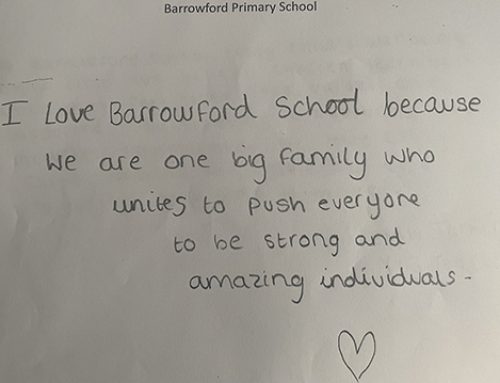
- Behaviour issues are rare – not because of strict control, but because of shared norms
“We know how many kids feel that they’re bullied at school… the only way of really addressing that is for kids themselves to make decisions about the culture of their class and the culture of their school. And when they do it together… if you’re doing social and emotional learning in a way that is safe and strengths-based and solution-focused for everybody, then that that will happen. And I’ve seen it happen in schools where people will say, you know, we don’t do that. That’s not what we do here. In a school I’ve just visited, one of the kids said to me ‘We don’t have violence or stealing or anything like that in this school.’”
The missing pillars
In 1996, Jacques Delors outlined four pillars of education:
- Learning to know
- Learning to do
- Learning to be
- Learning to live together
Most systems have focused heavily on the first two.
The latter two – Learning to Be and Learning to Live Together – have been neglected.
And yet, these are precisely the areas where many of today’s challenges sit:
disengagement, anxiety, fragmentation, loss of purpose.Rebalancing education requires us to take these pillars seriously.
A different starting point
If there is a single thread running through this conversation, it is this: Education is not primarily about delivering content. It is about shaping environments – environments where people feel safe, valued and able to contribute. Environments where learning emerges naturally from relationships and purpose.
When David asked what distinguishes Sue’s work from others working in this field, she offered a simple answer:
‘I’m interested in what’s good for us, not just what’s good for me.’



Leave A Comment
You must be logged in to post a comment.